Posts

Showing posts from January, 2026

1/29/2026 - Week 3 / Meeting 6: Neolithic / Natufian Culture

Image
  Unit: Neolithic Theme: Natufian Culture   I   Introduction The Neolithic period, or New Stone Age, is an Old World archaeological period and the final division of the Stone Age. It saw the Neolithic Revolution, a wide-ranging set of developments that appear to have arisen independently in several parts of the world. Among the main developments achieved by humans during the Neolithic were the creation of sedentary settlements along with the domestication of animals and plants.   II  Learning Objectives   Understand the two core processes that allowed the survival of Neolithic societies Explain the main characteristics of dance since the beginning of agriculture. Discuss the importance of the Natufian culture within the context of the Neolithic period.  Experience the dynamics of the areyto dance as a retention from the Neolithic period in the Caribbean   III    Main Lesson 1   Question 1 What two core processes do we need ...
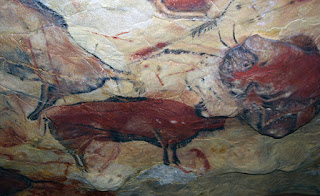
1/27/2026 - Wek 3 / Meeting 5: Paleolithic / Shamanic Dances

Image
        Language and Spiritual Cutulture in Old Stone Age     Timetable    First Ancestors  Our first ancestors lived  7 million  years ago Bipedal, upright walking  Ability to walk emerged long before humankind developed big brains. Even though they walked they were still tree climbers. No hominins has been found during this period yet. ----------------------  Homonins Hominins continued to develop  4 million  years ago grasping feet were lost. Multiple hominin species lived simultaneously.  They may have met ------------ Homo habilis 3 million  years ago hominins lived in Southern Africa. Tools allowed hominins to adapt to new environments. The first known stone tools were produced in Ethiopia. The tools may have been produced by  Homo habilis . The  Homo habilis  is a member of our own genus group, the genus  Homo ------------------- Homo erectus  2 million  years ago...

1/22/2026 - Week 2 / Meeting 4: The Labyrinth / The Dancer

Image
    Union: The Labyrinth Theme: The Dancer   I Introduction   According to Kassing (2007), from its origins dance served as a medium for magic and religion through rituals and ceremonies. For early societies, a ritual was a series of acts established through tradition. Ceremonies, on the other hand, signify or celebrate an important event.Ceremonies are performed by enacting strictly prescribed rituals. II Learning Objectives   Understand the outer and inner aspects of dance in non-literate societies during prehistory. Explain the importance of dance ornaments Gain an awareness of the role of the mind's eye in the development of art Discuss the role of the shaman in these early societies Articulate what cave art suggest in reference to dance  Experience the labyrinth III Main Lesson 1 The Dancer Take a look at the diagram on page 29 of Kassing (2007)   Source: Kassing, Gayle (2007). History of Dance:  An Interactive Arts Approach. Human Kinet...

1/20/2026 - Week 2 / Meeting 3: Homonins / The Oldest Human Rituals

Image
    I Unit: Homonins Theme: The Oldest Human Rituals Introduction   Human evolution is the lengthy process of change by which people originated from apelike ancestors. Scientific evidence shows that the physical and behavioral traits shared by all people originated from apelike ancestors and evolved over a period of approximately seven million years. II Learning Objectives   Understand the influence homonins had on human's abilities to dance Explain the importance of bipedality for dance development in the paleolithic Gain an awareness of the significance the construction of early shelters, burials and art objects had for human evolution Experience finger dexterity through choreography of hand gestures  III   Main Lesson   1   First Ancestors   2  N O T E S First Ancestors  Our first ancestors lived  7 million  years ago Bipedal, upright walking  Ability to walk emerged long before humankind developed big brains. ...